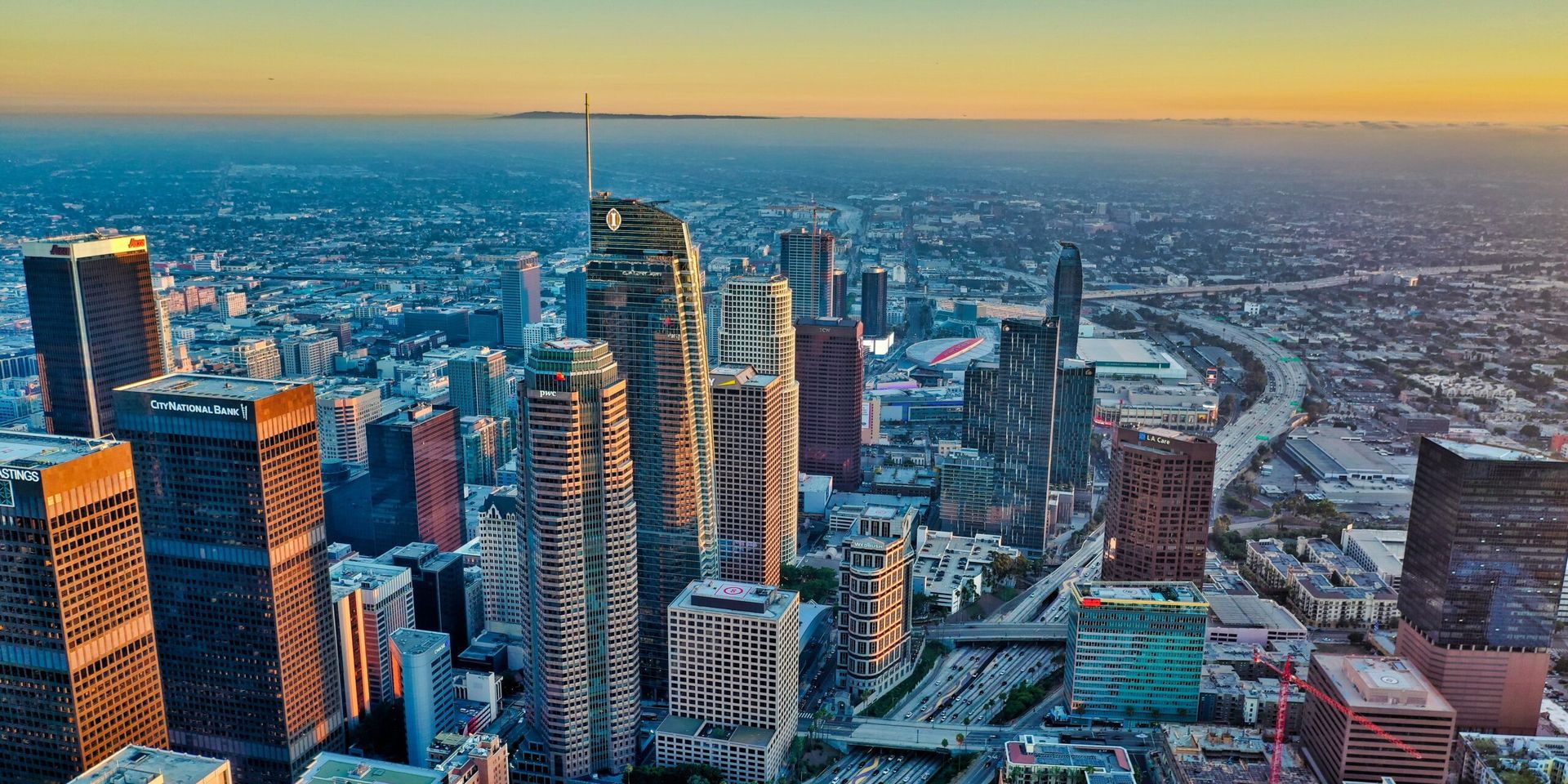
The commercial real estate market in Los Angeles is navigating a complex landscape in 2025, shaped by economic shifts, evolving workplace preferences, and technological innovation. As one of the largest and most diverse commercial hubs in the United States, Los Angeles reflects broader national and global trends, while also confronting unique local challenges.
Office Sector: Transformation and Adaptation
The Los Angeles office market continues to undergo profound change following the seismic impact of the COVID-19 pandemic and the subsequent rise of hybrid and remote work models. According to a recent report by CBRE, office vacancy rates have stabilized near 20% after peaking in 2023, reflecting a cautious rebound in leasing activity.
Employers are increasingly prioritizing flexibility and employee experience. High-quality, amenity-rich buildings in prime locations such as Downtown LA, Century City, and Santa Monica are experiencing strong demand, while older, less adaptable properties are struggling. The trend toward shorter lease terms and co-working spaces persists, signaling a shift in how companies approach workspace.
Several large corporations, including entertainment studios and tech firms headquartered in Los Angeles, have announced downsizing of their physical footprints, reallocating budgets toward digital infrastructure and employee wellness.
Industrial Real Estate: E-Commerce Fuels Growth
The industrial sector remains the brightest spot in Los Angeles commercial real estate, driven by the sustained boom in e-commerce and logistics. The region’s strategic position as a gateway for imports via the Ports of Los Angeles and Long Beach fuels demand for warehouse and distribution centers.
Developers are responding with new projects emphasizing automation, sustainability, and proximity to transportation nodes. However, escalating construction costs, labor shortages, and regulatory hurdles pose challenges to timely delivery.
Innovations such as robotics, AI-powered inventory management, and green building certifications are increasingly incorporated into new industrial developments, aligning with tenant demands for efficiency and environmental responsibility.
Retail and Hospitality: Reinvention in a New Era
Retail real estate in Los Angeles is adapting to a new consumer landscape marked by online shopping and changing lifestyle preferences. While brick-and-mortar stores face headwinds, there is a shift toward experiential retail that integrates dining, entertainment, and community events.
Mixed-use developments blending retail, residential, and office components are gaining popularity, particularly in walkable neighborhoods. Retailers are embracing technology for enhanced customer engagement, including augmented reality experiences and seamless omnichannel integration.
Hospitality remains a key economic driver, with recovery accelerated by rising tourism and business travel. Hotels are investing in health and safety measures, upgraded amenities, and sustainability initiatives to attract guests and remain competitive.
Investment Strategies and Emerging Sectors
Investors are increasingly focusing on sectors aligned with technology and life sciences. Los Angeles is emerging as a hub for biotech startups and innovation centers, creating new commercial real estate demand for specialized laboratory and office space.
Adaptive reuse projects, where obsolete buildings are converted into creative office spaces or residential units, are expanding as part of the city’s efforts to address housing shortages and preserve historic architecture.
Sustainability is central to investment decisions, with ESG (environmental, social, governance) criteria shaping portfolio strategies. LEED-certified properties and buildings with net-zero energy goals command premium valuations.
Economic and Regulatory Environment
The commercial real estate market is influenced by broader economic conditions, including inflationary pressures, interest rate hikes, and geopolitical uncertainties. These factors affect financing costs, investor sentiment, and development timelines.
Local government policies related to zoning, building codes, and incentives for green building impact project feasibility. Los Angeles’s ambitious climate goals, including a commitment to carbon neutrality by 2045, drive regulatory shifts that require adaptation from developers and property owners.
Outlook and Opportunities
Looking ahead, Los Angeles’s commercial real estate market is expected to balance challenges with opportunity. Demand for flexible, tech-enabled, and sustainable spaces will continue to grow. Collaboration between public and private sectors on infrastructure improvements and regulatory clarity will be key to supporting market vitality.
Stakeholders are advised to monitor evolving trends closely and leverage data-driven insights to navigate the dynamic environment.

Best Houses Contributor
Covers commercial property, development, and the zoning and regulation shaping where and how America builds.
This article features partner, contributor, or branded content from a third party. Members of the Best Houses editorial staff were not involved in the creation of this content. All views and opinions are those of the contributor alone.