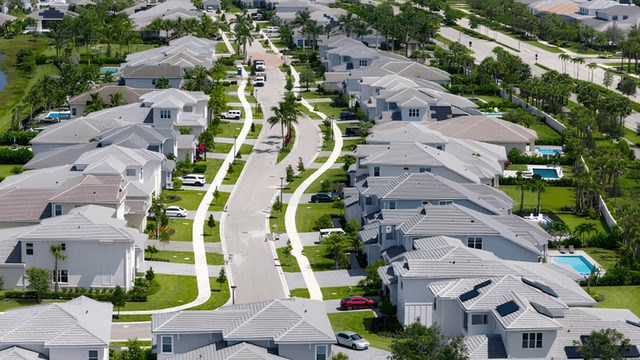
Rachid Amary discusses Dorset’s property market strategy, selective investment, renovation-led value, and the roles of Direct Trades and Dream Property Finance.
Rising borrowing costs are changing the calculations behind property purchases and renovations. For Dorset property investor and business owner Rachid Amary, the response is to hold his existing portfolio and pursue selective expansion, using careful purchase negotiations and targeted home improvements rather than relying on market-wide price growth.
Amary is behind two separate property businesses. Direct Trades provides home improvements, extensions and refurbishments in Poole, Bournemouth and Christchurch. Dream Property Finance, based in Parkstone, Poole, arranges unregulated bridging and commercial finance for property investors and businesses.
Together, they cover two important aspects of property projects: delivering improvements and assessing funding options. Their services and responsibilities remain separate.
What the Bank of England Rate Rise Means for Property Investors
On 5 November 2026, the Bank of England increased Bank Rate by 0.25 percentage points, from 3.75% to 4%.
A Bank Rate increase does not mean every property loan immediately becomes more expensive. Existing fixed-rate borrowing generally remains unchanged during its fixed period, while bridging and commercial lenders set prices according to their funding costs, lending criteria and the individual case.
However, higher borrowing costs can affect new purchases and refinancing. A project that appeared viable under one set of assumptions may need reassessing if interest costs rise, the works take longer or the expected refinance becomes less affordable.
For investors, the question is not simply whether finance is available. It is whether the entire project remains viable under less favourable conditions.
A Less Certain Sales Market Requires Better Due Diligence
Transactions falling through add another layer of uncertainty. TwentyCi data published by the Home Buying and Selling Council reported that 21.7% of agreed sales fell through before exchange in August 2026.
A failed transaction can reopen negotiations, but it does not automatically make a property a bargain. Buyers still need to understand why the previous sale failed, whether the asking price reflects comparable properties and what surveys or legal checks reveal.
Amary’s strategy is to seek lower purchase prices where the evidence supports them, rather than assuming that a discount from the asking price represents genuine value.
Rachid Amary’s Portfolio Strategy: Hold and Expand Selectively
Amary plans to retain his existing property portfolio while looking for opportunities to expand in unsettled market conditions.
The approach starts with stress-testing purchase prices and expected finished values. A prospective acquisition needs to make sense beyond the most optimistic forecast: what happens if the eventual valuation is lower, construction costs increase or the project takes longer?
Renovation is the second part of the strategy. Rather than depending entirely on general house-price appreciation, the aim is to improve individual properties through appropriate refurbishment, better layouts or additional usable space where feasible.
Holding the improved assets provides the opportunity to retain any resulting equity over time. That equity is not guaranteed, however, and it is not the same as readily available cash. Property values can fall, improvements can cost more than they add, and releasing equity through refinancing creates borrowing obligations.
Understanding GDV and Renovation-Led Value
Gross development value, commonly shortened to GDV, is the estimated value of a completed property or development after the planned work. It is not profit or a guaranteed sale price, and a lender’s independent valuation may differ.
A realistic assessment compares a conservatively estimated finished value with the full project cost, including:
- The purchase price, stamp duty and legal costs.
- Renovation or construction work and professional fees.
- Interest, applicable lending fees and valuation costs.
- Holding or selling costs and a contingency for delays or overruns.
A project should also be tested against a lower finished value and a longer timetable. Increasing GDV only creates a financial benefit if the improvement in value justifies the associated costs and risks.
Direct Trades: Home Improvements Across Poole, Bournemouth and Christchurch
For homeowners, Direct Trades provides renovation and building services through a single point of contact, coordinating tradespeople, scheduling, materials and project delivery.
In a more cost-conscious market, defining the scope before work begins becomes particularly important. Clients need to understand what a quotation includes, how additional work will be agreed and which improvements address their actual needs.
A better layout, an extension or a refurbishment may improve a home’s usefulness without necessarily producing an equivalent increase in its market value. For clients planning to sell, local comparable values matter; for those staying, comfort and practicality may be the priority.
The appropriate project depends on the homeowner’s circumstances, not a blanket assumption that every renovation should maximise resale value.
Dream Property Finance: Assessing Funding and Repayment Options
Dream Property Finance serves property investors and businesses seeking unregulated bridging and commercial finance. It acts as a broker, not a lender, and does not arrange regulated residential mortgages.
For clients considering short-term borrowing, the changing market makes the repayment plan especially important. A sale or refinance should be assessed realistically, with consideration given to delays, changing lender criteria and the affordability of longer-term borrowing.
Comparing total costs matters more than comparing headline rates alone. Approval and terms remain subject to lender assessment, and property securing a loan may be repossessed if repayments are not maintained.
Amary’s own investment strategy is not a recommendation for every client. The relevant lesson is to assess each property, renovation and funding decision on its own merits: negotiate against evidence, budget for uncertainty and avoid relying on guaranteed appreciation.
Dream Property Finance is not authorised or regulated by the Financial Conduct Authority. It arranges unregulated bridging and commercial finance only and does not arrange regulated mortgages.

Best Houses Contributor
Covers residential real estate and the agents behind it, from listings and design to the deals that close.
This article features partner, contributor, or branded content from a third party. Members of the Best Houses editorial staff were not involved in the creation of this content. All views and opinions are those of the contributor alone.