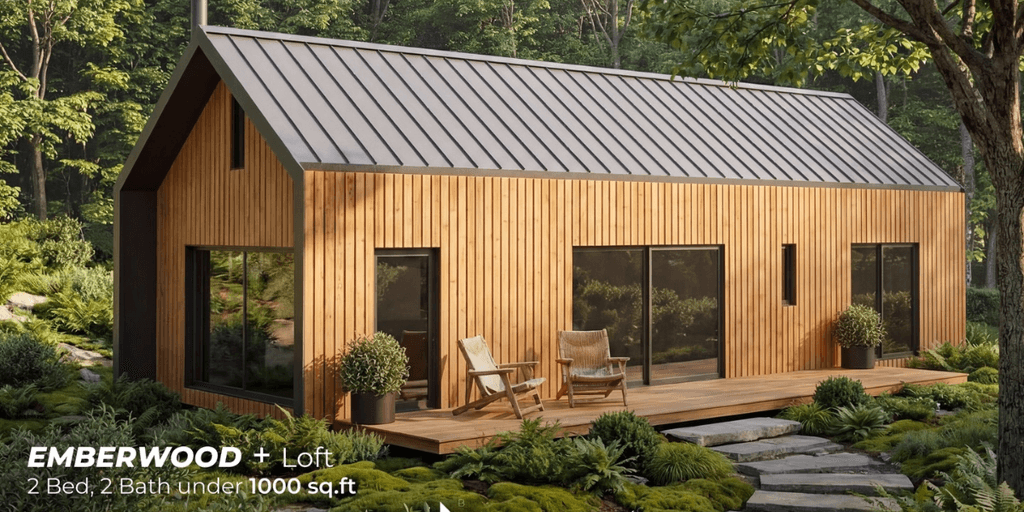
STR design mistakes cost investors revenue, intentional cabin design drives higher bookings, pricing power, and guest loyalty.
Most short term rental investors assume the success of a cabin depends on location, photography, or platform strategy.
In reality, a large portion of performance is already locked in before the first booking ever happens.
It’s embedded in the design itself.
Not just the aesthetics, but how the space behaves as a business asset.
This is where many STR properties quietly lose money without the owner realizing it.
And it’s also where design studios like Ohmees are reshaping how serious investors think about hospitality real estate.
The Problem Most Investors Don’t See
Walk through a typical underperforming cabin listing and you’ll notice a pattern:
- Beautiful exterior, but awkward interior flow
- Stylish furniture, but inefficient space usage
- “Instagrammable” corners, but poor guest functionality
- High build costs, but average nightly rates
On paper, the property looks like it should succeed.
In practice, it competes at the same level as far cheaper listings.
That gap is not a marketing problem.
It’s a design efficiency problem.
Most investors approach cabin development like a construction checklist:
- Pick a scenic lot
- Hire a builder
- Add trending finishes
- Launch on Airbnb
But that process ignores a critical layer: how design directly influences revenue ceilings.
In STR markets, design is not decoration, it is pricing infrastructure.
Why Design Quietly Controls Nightly Rate
Guests don’t evaluate cabins the way investors do.
They don’t analyze square footage or material costs.
They react emotionally within the first 30 seconds of seeing a space.
That emotional reaction determines:
- Whether they book or keep scrolling
- How much they’re willing to pay
- Whether they perceive the stay as “premium” or “standard”
- Whether they leave a 4-star or 5-star review
This is where design becomes financial leverage.
A cabin that feels intentional, cohesive, and immersive can command significantly higher rates, even if it’s smaller or in a similar location.
Meanwhile, a poorly optimized layout forces the property to compete on price, not experience.
That’s the hidden revenue leak.
And it compounds over time.
The STR Industry’s Biggest Design Mistake
The short term rental market has evolved quickly, but design thinking hasn’t kept pace.
Many cabins are still built using one of three outdated approaches:
1. The Pinterest Copy Method
Investors replicate trending aesthetics without considering guest behavior or operational flow.
2. The Builder Default Layout
Floor plans optimized for cost efficiency, not guest experience or emotional impact.
3. The Upgrade Trap
Adding expensive finishes to a weak layout, hoping aesthetics will compensate for structural limitations.
All three approaches miss the same truth:
Design only works when it is aligned with performance goals.
Without that alignment, even expensive properties underperform.
Where Intentional Design Changes Everything
Studios like Ohmees approach cabin design from a different starting point.
Instead of asking, “How should this look?”
They ask questions like:
- What type of guest is this property trying to attract?
- What emotional experience increases perceived value?
- How can the layout improve operational efficiency for cleaners and hosts?
- Where can design decisions directly increase nightly rate potential?
This shifts the entire outcome of the project.
Design becomes a strategy layer, not an aesthetic layer.
That difference shows up in measurable ways:
- Higher average daily rates
- Stronger occupancy in off-season months
- Increased guest satisfaction scores
- More organic social sharing
- Improved brand recognition across listings
In other words, the cabin stops behaving like a commodity.
It starts behaving like a product.
The Psychology Behind High-Performing Cabins
High-performing STR properties are not just well-designed.
They are psychologically structured.
They guide how guests feel and behave throughout the stay.
For example:
- Entry sequences are designed to create immediate “wow” moments
- Window placement frames nature as part of the interior experience
- Lighting layers shift mood across different times of day
- Private zones and shared zones are balanced to reduce friction between guests
- Small spatial cues reinforce a sense of luxury and intentionality
None of these details are accidental.
They are engineered emotional triggers.
And they directly influence reviews, pricing power, and repeat bookings.
Guests may not consciously recognize the design strategy, but they feel it.
That feeling is what they pay for.
Why STR Investors Are Re-Evaluating the Build Phase
A shift is happening in the investment community.
More experienced operators are realizing that returns are often decided long before marketing begins.
A well-positioned property with average marketing will often outperform a poorly designed property with excellent marketing.
That realization is changing how investors allocate budgets.
Instead of treating design as a cost center, they are beginning to see it as a revenue multiplier.
This is where design studios like Ohmees have gained traction.
Rather than delivering generic cabin aesthetics, they focus on aligning design with financial outcomes from the start of the project.
Every decision, layout, materials, amenities, is evaluated through a performance lens.
Not just beauty.
Not just trends.
But long-term revenue potential.
The Rise of “Hospitality-First” Design Thinking
A new category is emerging in real estate development: hospitality-first design.
This approach treats every property as a guest experience business before it is a physical structure.
Under this model:
- Layouts are designed for booking performance, not just architectural balance
- Interiors are shaped by guest psychology, not just visual trends
- Amenities are chosen based on perceived value, not just cost
- Spaces are optimized for shareability, not just usability
This is a fundamental shift from traditional construction thinking.
And it is reshaping what “successful real estate” means in the STR space.
The Bigger Opportunity Investors Are Missing
Most investors still focus on acquiring better locations or scaling more properties.
But one of the highest leverage opportunities is often overlooked:
Improving the design efficiency of each existing or planned cabin.
Even small design improvements can create disproportionate returns because they influence:
- Pricing flexibility
- Booking conversion rates
- Guest satisfaction
- Brand differentiation
In saturated STR markets, differentiation is no longer optional.
It is structural.
And design is one of the few levers that directly impacts all of these outcomes at once.
Final Thought
The future of short term rental investing is not just about owning better properties.
It’s about building smarter ones.
Cabins that are designed with intention outperform those built on assumptions.
They earn more, sustain higher occupancy, and create stronger emotional connections with guests.
And as competition continues to increase, the gap between “well-located” and “well-designed” will only grow wider.
In that gap lies the real opportunity.
Explore More About Ohmees
Connect with Ohmees, Instagram, Pinterest, and Trustpilot.

Best Houses Contributor
Covers residential real estate and the agents behind it, from listings and design to the deals that close.
This article features partner, contributor, or branded content from a third party. Members of the Best Houses editorial staff were not involved in the creation of this content. All views and opinions are those of the contributor alone.