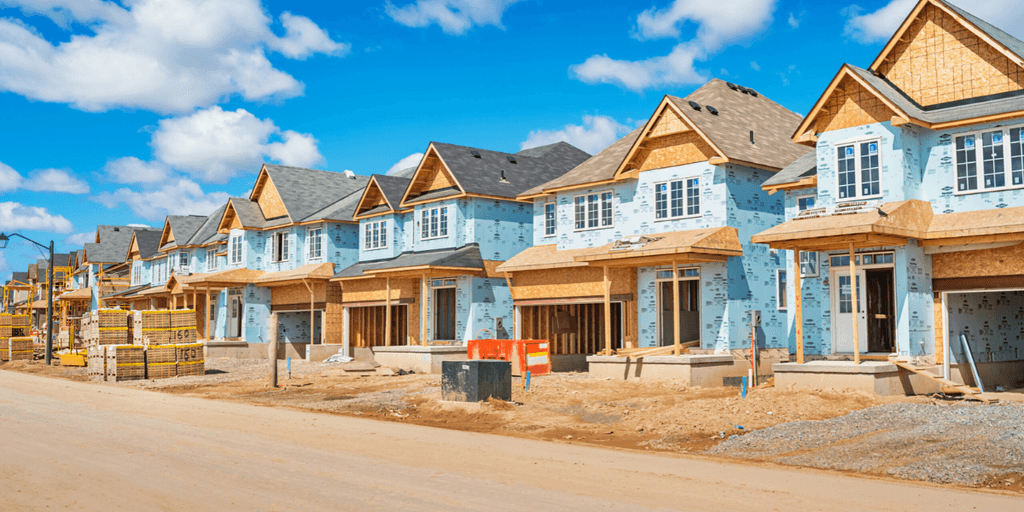
HUD’s revised FHA rules allow qualifying build-to-rent developments to use established multifamily mortgage insurance programs.
A federal policy change announced on October 14 could expand the financing options available to developers constructing single-family homes for rental use. The U.S. Department of Housing and Urban Development said qualifying build-to-rent communities would become eligible for mortgage insurance under two Federal Housing Administration multifamily programs.
The decision recognizes a residential housing model that combines single-family-style homes with rental ownership and management. Rather than selling each house to a separate buyer, a developer or property owner retains the homes and leases them to residents.
HUD said the policy was designed to remove outdated restrictions and encourage additional rental housing construction. The revised eligibility took effect immediately, subject to the requirements of the applicable programs.
What the Policy Changes
The Federal Housing Administration's Section 221(d)(4) program supports eligible new multifamily construction and substantial rehabilitation. Section 223(f) supports financing for the acquisition or refinancing of existing multifamily rental properties.
Under the updated policy, qualifying build-to-rent communities can use these programs under the same general terms and conditions applied to traditional multifamily rental developments.
The eligible communities may include single-family houses, duplexes, and triplexes, whether constructed using conventional methods or manufactured housing. The financing route depends on the project and the requirements set out in the relevant program guidance.
The change broadens access to established federal financing mechanisms, but it does not guarantee that every rental-home development will qualify. Lenders and developers must still evaluate individual projects against the program rules and their financial circumstances.
Why Single-Family Rentals Matter
Single-family rental homes occupy a distinct position in the residential market. They can offer residents separate entrances, private outdoor space, and layouts that differ from apartment buildings.
For some households, renting a house can provide flexibility without the upfront costs associated with homeownership. Residents may avoid a mortgage down payment and certain responsibilities associated with owning a property, although they remain subject to rent, lease conditions, and other housing expenses.
Build-to-rent communities can also provide professional management and maintenance arrangements. The level of service varies by operator, and rental terms differ among developments.
From the owner's perspective, retaining a group of homes creates a portfolio that can generate rental income over time. That structure also exposes owners to vacancies, maintenance costs, insurance expenses, property taxes, and changes in local demand.
Financing and Construction Decisions
Financing plays an important role in determining whether residential projects proceed. Developers must fund land acquisition, planning, construction, infrastructure, and the period before properties begin generating rental income.
A financing program that better fits a project's structure may improve its feasibility or provide an alternative to other borrowing arrangements. However, the effect depends on the terms offered, eligibility requirements, and the project's expected financial performance.
Developers also face challenges that financing policy cannot resolve on its own. Land availability, zoning restrictions, permitting, construction labor, materials, utility connections, and local infrastructure can delay or increase the cost of housing projects.
Even when financing is available, developers must determine whether expected rents can support construction and operating expenses while meeting market demand.
Potential Effects on Renters
Additional rental construction can broaden the options available to households, especially in areas where the existing housing stock does not match residents' needs.
However, a new development does not automatically create affordable housing. Rental prices are influenced by location, construction costs, property features, operating expenses, financing conditions, and the incomes of prospective tenants.
A community of newly built houses may appeal to households seeking additional space, but its rents could remain beyond the reach of lower-income residents. The policy announcement did not establish that the resulting homes would be subject to a specific affordability requirement beyond the applicable program rules.
The geographic distribution of construction will also matter. New homes can ease supply pressures in the communities where they are built, but they may have limited influence on markets with different housing needs or more restrictive development conditions.
Implications for the Residential Market
The revised policy gives qualifying developers another option for financing rental housing. If the change encourages projects that otherwise would not proceed, it could eventually increase the number of homes available to tenants.
Real estate professionals will need to assess any resulting supply changes at the local level. Rental listings, vacancy rates, new construction, and the relationship between rents and household incomes provide a clearer picture of market conditions than a national policy announcement alone.
The impact on homeownership is also not predetermined. Build-to-rent developments add rental options, but their relationship with homes available for individual purchase will depend on land use, construction patterns, and local market demand.
Measuring the Policy’s Effect
HUD's announcement establishes a change in financing eligibility, not a forecast of how many homes will be built. The results will depend on developers' decisions, lender participation, project economics, and the practical requirements of construction.
The central question is whether the expanded financing route helps move viable projects into development and whether those projects meet local housing needs.
For renters, the potential benefit is additional choice. For developers, it is greater flexibility in financing qualifying communities. For the residential market, the policy offers another mechanism to support rental supply, with its eventual significance dependent on actual construction and occupancy.

Best Houses Contributor
Covers residential real estate and the agents behind it, from listings and design to the deals that close.
This article features partner, contributor, or branded content from a third party. Members of the Best Houses editorial staff were not involved in the creation of this content. All views and opinions are those of the contributor alone.